
The timeline starts with the sun
Sunset portraits begin long before the wedding day. I check the sunset time for the date, study the orientation of the venue, and work backward with the couple and planner. The goal is to protect a short window when the sun is low enough to become directional without asking the couple to disappear from their reception for long.
The warm period before sunset is often called golden hour, but its length and character depend on weather, season, latitude, and the surrounding landscape. A tree line or tall building can block direct sun well before the published sunset time, which is why local scouting matters.
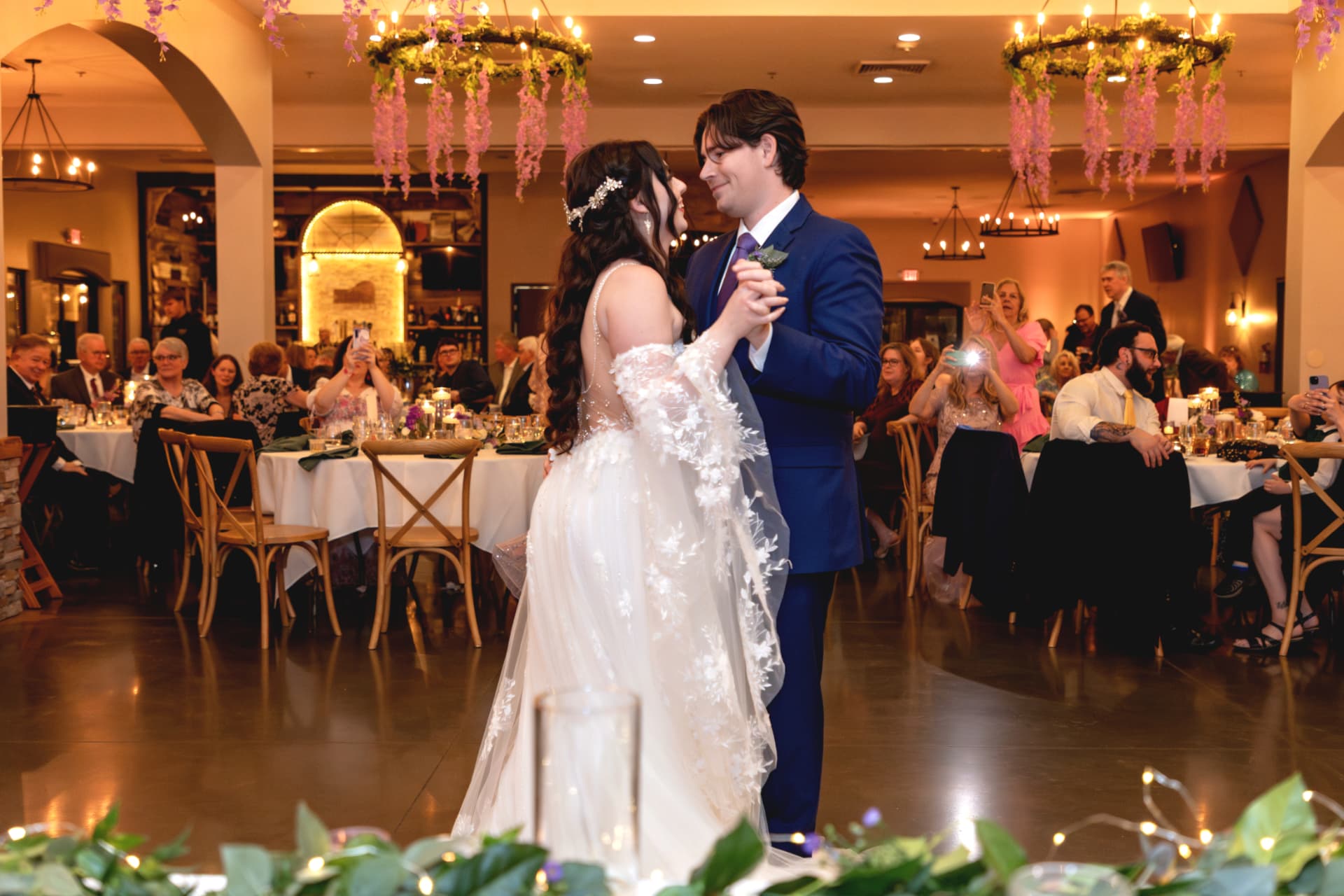
Scout for direction, not just scenery
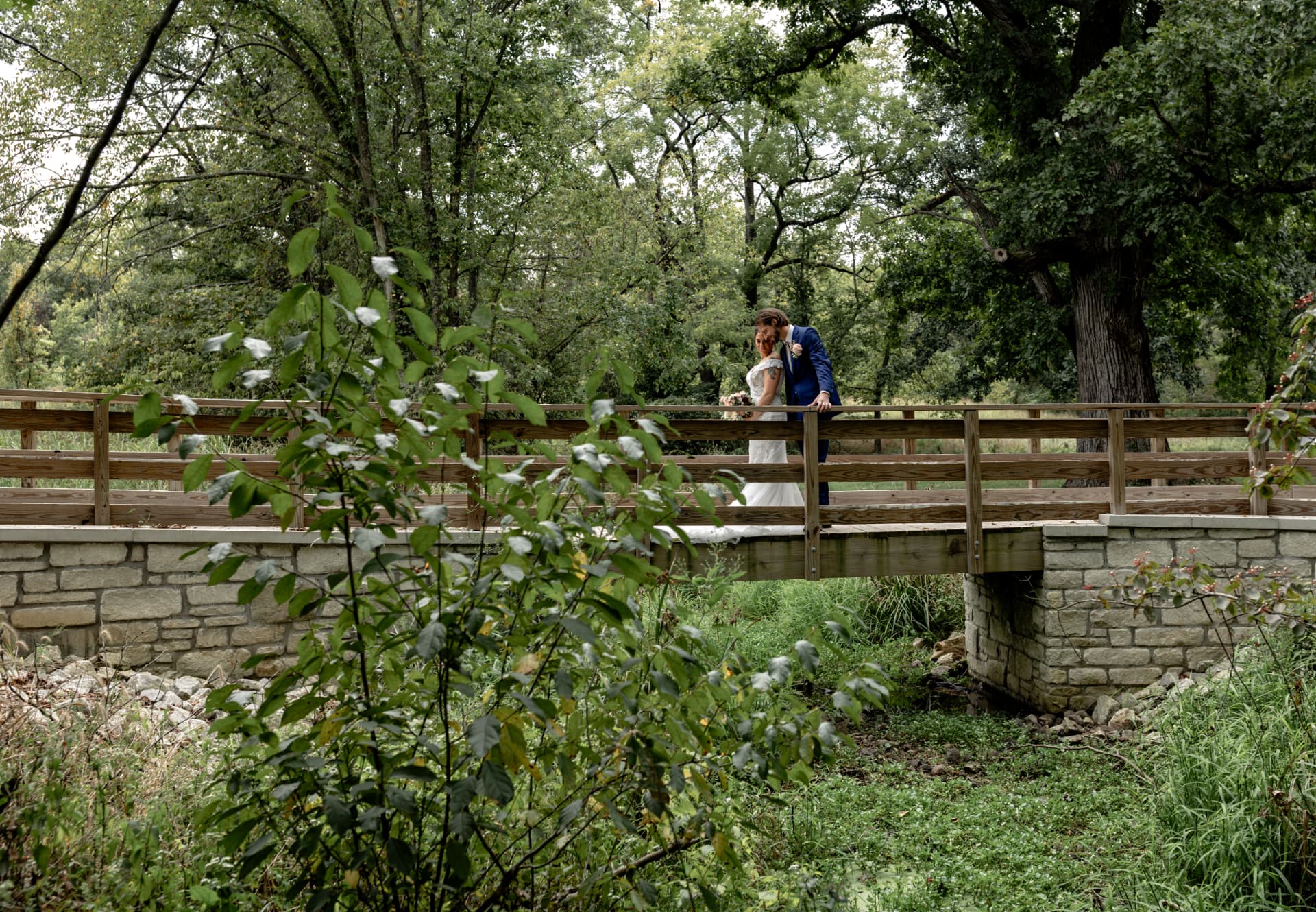
A beautiful background is only useful if the light works there. I look for an open western horizon, clean sightlines, reflective surfaces, and enough room to change camera position. I also note where open shade will remain if direct sunlight becomes too hard or clouds remove the color from the sky.
A backup position is part of the plan. Overcast conditions can produce soft, even light that is excellent for skin tones, while a break in the clouds can create a dramatic rim light for only a few minutes. Both can make strong photographs when the location offers options.
Work with the changing light
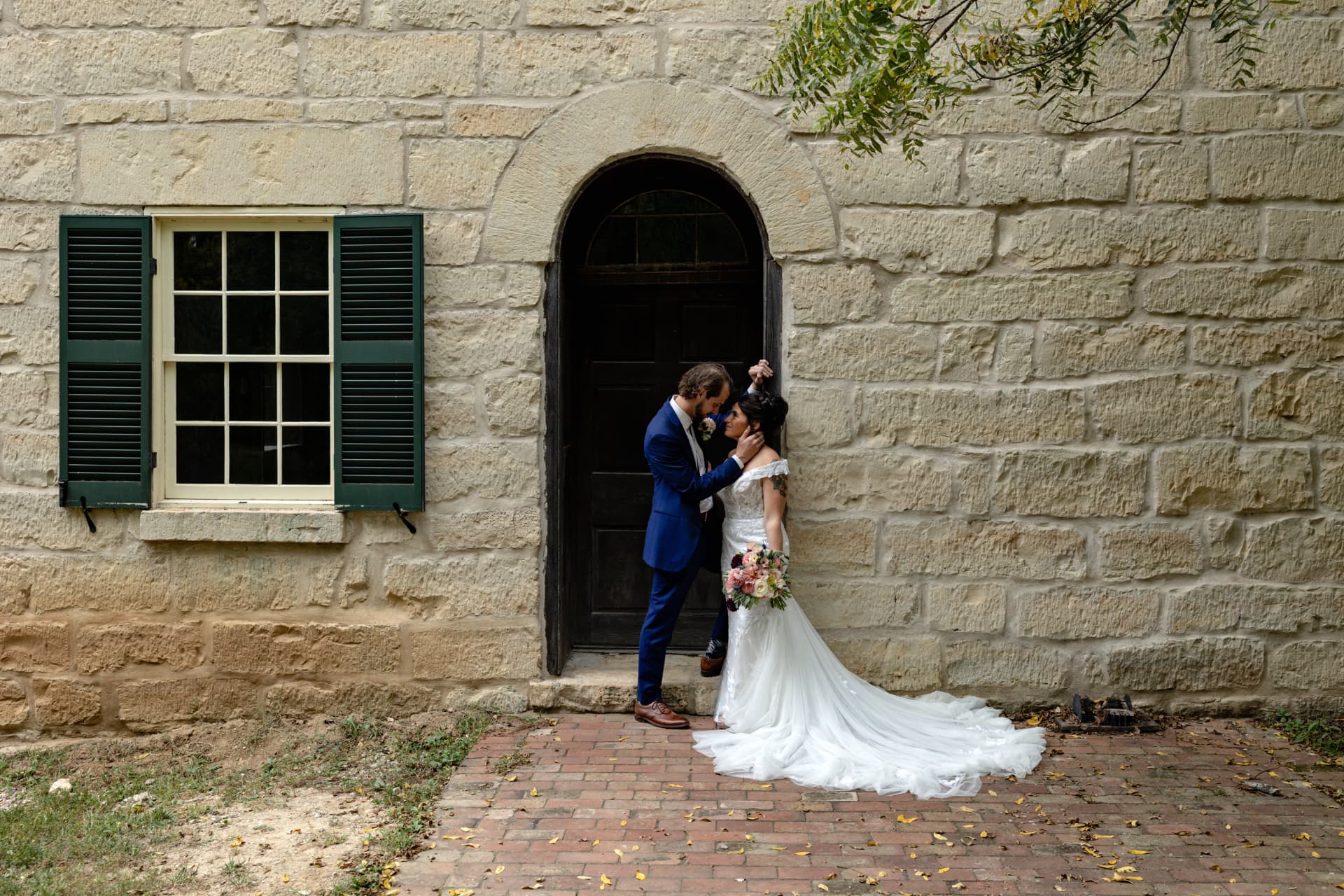
Low sun changes by the minute, so the portrait sequence stays simple. I begin with reliable compositions, then add movement through walking, turning, and natural interaction. Continuous autofocus and an appropriate shutter speed help preserve sharpness while fabric, hair, and the couple are moving.
Backlighting can create a bright edge around the couple and keep direct sun out of their eyes. Exposure must still protect important highlights while retaining enough information in the subjects. A lens hood, careful angle changes, and selective use of flare keep the effect intentional rather than washed out.
Build breathing room into the day
A protected fifteen to twenty minute portrait window is often more useful than a longer session scheduled at the wrong time. It gives the couple space to be present while the photographer responds to the best light available.
The result is not a single sunset pose. It is a short visual sequence with wide environmental frames, closer portraits, movement, and quiet moments that connect the setting to the story of the day.